
Digital marketing can be one of the most powerful ways to grow a business — but only when it is guided by a clear strategy.
Many businesses are active online. They have a website, post on social media, boost content, send WhatsApp messages, run ads and maybe even pay an agency. But activity alone does not guarantee results. Without a strategy, digital marketing can quickly become a collection of disconnected tasks that consume time and budget without producing meaningful sales growth.
A strong digital marketing strategy helps you answer important questions:
Who are we trying to reach?
What do we want them to do?
Which platforms should we use?
What message will make them care?
How will we capture leads?
How will we follow up?
How will we measure success?
In simple terms, a digital marketing strategy is a plan for using online channels to attract the right people, convert them into leads or customers, and improve results over time.
Google’s own search guidance places strong emphasis on creating helpful, reliable, people-first content rather than content created only to manipulate rankings, which is a useful principle for any business building a long-term digital presence.
In this article, we will walk through how to build a practical digital marketing strategy for your business.

1. Start With Your Business Goals
Before choosing platforms, creating content or running ads, you need to define what you want digital marketing to achieve.
A common mistake is starting with the channel first:
“We need to be on TikTok.”
“We need to run Facebook ads.”
“We need SEO.”
“We need more followers.”
Those may be useful, but they are not goals. They are tools.
Your actual business goal may be:
- Generate more qualified leads
- Increase online sales
- Get more quote requests
- Drive bookings
- Increase store visits
- Grow brand awareness
- Improve customer retention
- Launch a new product or service
- Enter a new market
- Reduce dependence on referrals
The clearer your goal, the easier it becomes to choose the right channels, content, budget and metrics.
For example, if your goal is immediate leads, Google Search Ads may be more useful than posting general awareness content. If your goal is brand awareness, short-form video, influencer marketing and social media may be more effective. If your goal is repeat purchases, email, WhatsApp and CRM campaigns may matter more than constantly chasing new audiences.
A digital marketing strategy should always begin with the business result you want.
2. Understand Your Target Audience
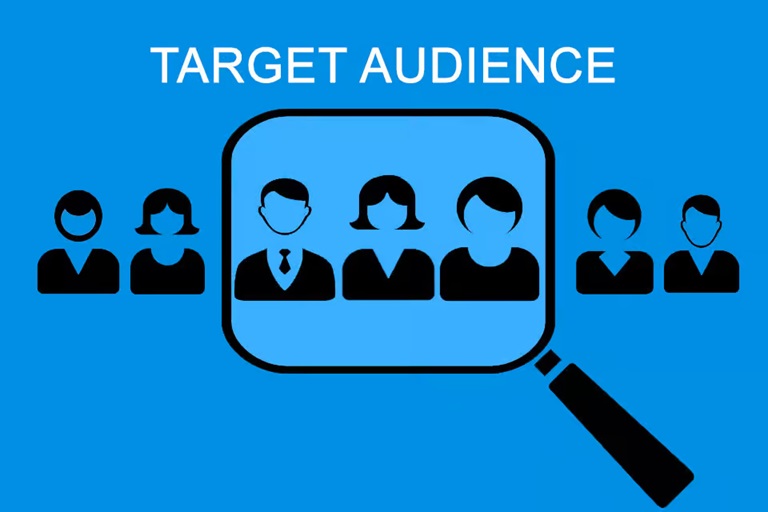
Digital marketing works best when it is built around a clear understanding of the people you want to reach.
Your target audience is not simply “everyone who might buy from us.” The more specific you are, the stronger your messaging becomes.
Ask yourself:
- Who is our ideal customer?
- What problem are they trying to solve?
- What do they care about?
- What motivates them to buy?
- What makes them hesitate?
- What questions do they ask before making a decision?
- Where do they spend time online?
- What type of content do they trust?
- Are they the decision-maker or do they influence the decision?
For a business-to-consumer company, your audience may be based on lifestyle, location, income, interests, needs and buying behaviour.
For a business-to-business company, your audience may include business owners, procurement managers, marketing managers, finance teams or operations managers. In that case, you may need to think about the person using the product, the person approving the budget and the person making the final decision.
A good strategy does not just define demographics. It defines the customer’s mindset.
For example:
A small business owner may not be searching for “CRM implementation services.” They may be thinking, “I am losing leads because my team forgets to follow up.”
That insight changes your content, your ads and your offer.
3. Define Your Value Proposition
Once you know who you are targeting, you need to make it clear why they should choose your business.
Your value proposition is the reason someone should pay attention to you instead of a competitor.
It should answer:
- What do you offer?
- Who is it for?
- What problem does it solve?
- What makes you different?
- Why should someone trust you?
A weak value proposition says:
“We offer quality service at affordable prices.”
A stronger value proposition says:
“We help small businesses generate more qualified leads through practical digital marketing strategies, paid advertising and CRM-driven follow-up systems.”
The second version is more specific. It tells the audience who you help, what you help them achieve and how you do it.
Your value proposition should appear clearly on your website, landing pages, ads, social media bios, email campaigns and sales materials.
If people cannot quickly understand what you do and why it matters, your digital marketing will struggle.
4. Map the Customer Journey
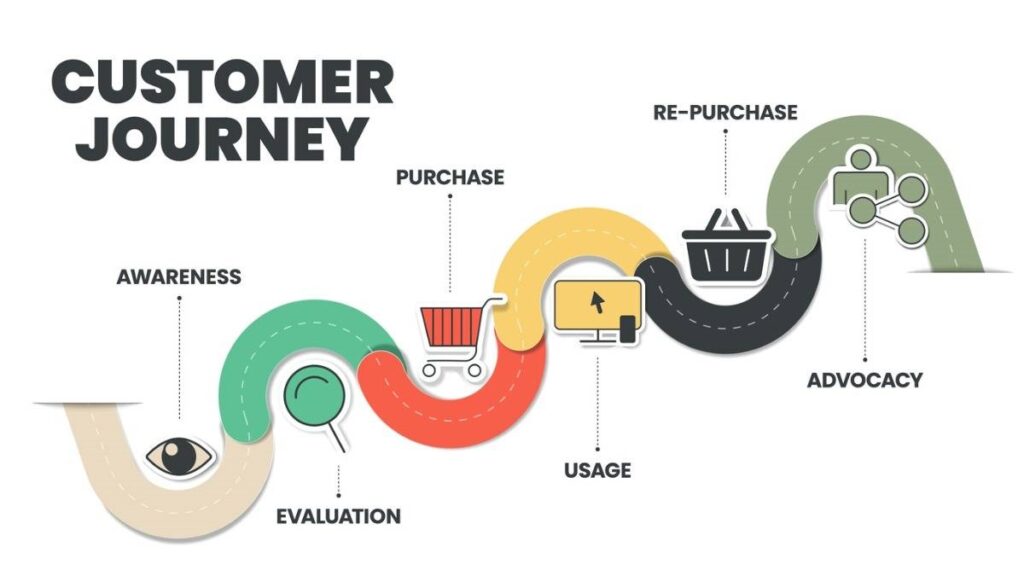
People rarely buy the first time they hear about your business. Most customers go through a journey before they enquire, purchase or book.
A simple customer journey may look like this:
- Awareness — They discover your business.
- Interest — They start paying attention.
- Consideration — They compare options.
- Enquiry — They contact you, request a quote or fill in a form.
- Conversion — They buy, book or sign up.
- Retention — They return, refer or buy again.
Your digital marketing strategy should support each stage.
At the awareness stage, you may need social media, SEO, PR, videos or educational content.
At the consideration stage, you may need case studies, testimonials, product comparisons, FAQs and detailed service pages.
At the enquiry stage, you need strong calls to action, easy contact options, WhatsApp buttons, lead forms and landing pages.
At the conversion stage, you need fast follow-up, clear pricing, persuasive sales conversations and trust-building material.
At the retention stage, you need email marketing, WhatsApp updates, loyalty campaigns and customer relationship management.
This is where many businesses make a mistake. They focus only on attracting attention but do not build the system that turns attention into enquiries and sales.
5. Audit Your Current Digital Presence
Before building a new strategy, review what you already have.
Look at your:
- Website
- Google Business Profile
- Social media pages
- Online reviews
- Email database
- WhatsApp communication
- Paid advertising accounts
- SEO performance
- Analytics setup
- CRM or lead tracking process
- Content quality
- Sales follow-up process
Ask:
- Is our website easy to understand?
- Can people contact us quickly?
- Are our services clearly explained?
- Do we have strong calls to action?
- Are we showing proof, reviews or testimonials?
- Are we tracking enquiries?
- Do we know which channels generate leads?
- Do we respond to leads quickly?
- Are we nurturing people who do not buy immediately?
- Are our social media platforms aligned with our business goals?
This audit will help you identify gaps. Sometimes the problem is not that the business needs more traffic. The problem is that the website does not convert, the offer is unclear, or leads are not followed up properly.
6. Choose the Right Digital Marketing Channels
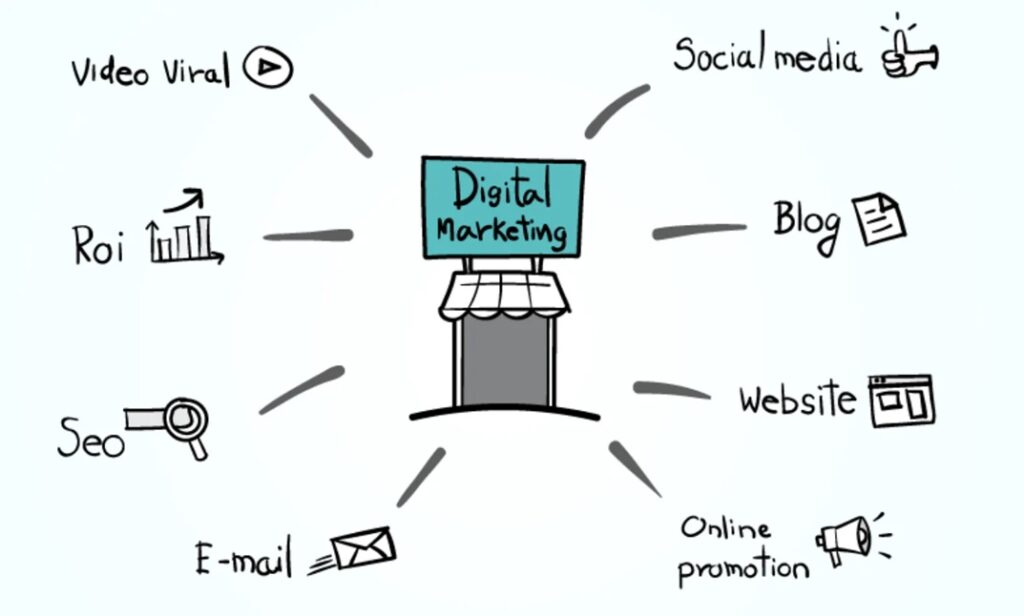
There are many digital marketing channels available, but your business does not need to use all of them at once.
The right channels depend on your audience, goals, budget and sales cycle.
Common channels include:
Website and SEO
Your website is often the centre of your digital marketing strategy. It should explain what you do, build trust and encourage visitors to take action.
SEO helps your business appear when people search for information, products or services related to what you offer. It is especially useful for long-term visibility.
Google Business Profile
For local businesses, Google Business Profile is extremely important. It helps people find your business on Google Search and Maps, view your location, read reviews and contact you.
Social Media Marketing
Social media helps with visibility, trust, education, community building and demand generation. Different platforms serve different purposes. LinkedIn may be better for B2B authority. Instagram and TikTok may be better for visual storytelling. Facebook may work well for local communities and lead campaigns.
Content Marketing
Content marketing includes blog posts, videos, guides, FAQs, case studies, social media posts and newsletters. Good content helps answer customer questions, build trust and support SEO.
Paid Advertising
Paid advertising can help you reach people faster. This may include Google Ads, Meta Ads, LinkedIn Ads, TikTok Ads, YouTube Ads or display advertising.
Google’s Performance Max campaigns, for example, use Google AI across areas such as bidding, budget optimisation, audiences, creatives and attribution, based on the advertiser’s conversion goals and provided assets.
Email and WhatsApp Marketing
These channels are useful for follow-up, retention, promotions, reminders and nurturing leads. They work best when you have permission, relevant messaging and a clear customer database.
CRM and Marketing Automation
A CRM helps you store lead and customer information, track communication and manage follow-up. HubSpot describes its customer platform as including marketing, sales, customer service and CRM software to support business growth.
The goal is not to be everywhere. The goal is to be present where it matters most.

7. Build a Strong Website and Landing Page Foundation
Your website can make or break your digital marketing performance.
You can have excellent ads, strong content and good traffic, but if your website is confusing or difficult to use, potential customers may leave without taking action.
A good business website should have:
- A clear headline
- A simple explanation of what you offer
- Strong calls to action
- Easy contact options
- Mobile-friendly design
- Fast loading speed
- Service or product pages
- Trust signals
- Testimonials or reviews
- FAQs
- Lead forms
- WhatsApp or click-to-call buttons
- Tracking installed
For campaigns, you may also need landing pages. A landing page is a focused page designed for one specific goal, such as getting people to register, request a quote, book a consultation or download a guide.
A landing page should usually include:
- One clear offer
- One main call to action
- Benefits of taking action
- Social proof
- Short form or contact option
- Simple design with minimal distractions
Your website should not just look good. It should help people understand, trust and contact your business.
8. Create a Content Strategy
Content is how your business educates, attracts and builds trust with your audience.
But content should not be random. Posting only when you feel inspired usually leads to inconsistency and weak results.
A good content strategy should include content pillars. These are the main themes your business will talk about regularly.
For example, a digital marketing agency may use content pillars such as:
- Digital marketing education
- Website and lead generation tips
- Paid advertising advice
- Social media strategy
- Case studies and results
- AI for business marketing
A car dealership may use:
- Vehicle features
- Finance tips
- Customer handovers
- Vehicle maintenance
- Special offers
- Dealership trust and service
A beauty salon may use:
- Treatment education
- Before-and-after results
- Customer testimonials
- Staff expertise
- Seasonal promotions
- Self-care tips
Your content should support different stages of the customer journey.
For awareness, create content that educates and attracts attention.
For consideration, create content that answers objections and builds trust.
For conversion, create content that promotes offers, testimonials and clear next steps.
A useful content mix includes:
- Educational posts
- FAQs
- How-to guides
- Customer stories
- Case studies
- Behind-the-scenes content
- Product or service explanations
- Short videos
- Blog posts
- Email newsletters
- Promotional offers
The best content is not always the most polished. It is the content that is useful, relevant and connected to what your audience actually needs.

9. Plan Your Paid Advertising
Paid advertising can help you reach more people, generate leads and drive sales faster than organic channels alone. However, ads can also waste money quickly if they are not planned properly.
Before running ads, define:
- The campaign objective
- The target audience
- The offer
- The budget
- The platform
- The creative format
- The landing page
- The conversion action
- The follow-up process
- The success metric
For example, a lead generation campaign may be planned like this:
Goal: Generate quote requests
Audience: Business owners in Gauteng
Platform: Google Search Ads and Meta Ads
Offer: Free consultation
Landing page: Consultation booking page
Conversion action: Form submission or WhatsApp enquiry
Success metric: Cost per qualified lead
The biggest mistake businesses make with ads is focusing only on clicks, likes or impressions. Those numbers can be useful, but they do not always mean sales.
Your ads should be measured against business outcomes such as leads, bookings, sales, revenue, customer acquisition cost and return on ad spend.
10. Set Up Tracking and Analytics
If you are not tracking performance, you are guessing.
A digital marketing strategy needs data so you can understand what is working and what needs to improve.
At a basic level, you should track:
- Website visitors
- Traffic sources
- Enquiries
- Form submissions
- Phone calls
- WhatsApp clicks
- Purchases
- Bookings
- Cost per lead
- Conversion rate
- Sales from leads
- Return on ad spend
Google Analytics 4 allows businesses to mark important events as key events, helping measure important actions from channels such as search, email and social for cross-channel campaign measurement.
Tracking helps you answer questions like:
- Which channel brings the most leads?
- Which campaign generates the best quality leads?
- Which landing page converts best?
- Which ads are wasting money?
- Which content brings people to the website?
- What is the cost of acquiring a customer?
Once you know this, you can make better decisions.
11. Build a Lead Management and Follow-Up Process
Generating leads is only half the job. What happens after the lead comes in is just as important.
Many businesses lose potential customers because they respond too slowly, forget to follow up, or do not have a clear sales process.
Your strategy should define:
- Where leads go
- Who receives them
- How quickly they are contacted
- What message is sent first
- How many follow-ups happen
- How leads are recorded
- How sales outcomes are tracked
- How lost leads are re-engaged
For example:
A person fills in a form on your website.
They receive an automatic confirmation.
The sales team gets notified.
A salesperson calls or WhatsApps within 15 minutes.
The lead is added to the CRM.
A follow-up is scheduled for the next day.
If they do not buy, they are added to a nurture sequence.
This type of system can dramatically improve the value of your marketing.
A business does not only need more leads. It needs better lead handling.

12. Use AI Carefully and Practically
AI can be a powerful support tool in digital marketing, especially for small teams.
You can use AI to help with:
- Content ideas
- Blog outlines
- Social media captions
- Ad copy variations
- Email subject lines
- Customer persona development
- Competitor research
- FAQs
- Sales scripts
- Reporting summaries
- Campaign planning
- Keyword ideas
However, AI should not replace strategy. It should support it.
The quality of AI output depends on the quality of your brief. Instead of asking, “Write me a Facebook post,” give more context:
“Write five Facebook post options for a Johannesburg-based accounting firm targeting small business owners who struggle with tax compliance. The tone should be professional, helpful and easy to understand. Each post should include a clear call to action to book a consultation.”
AI can help you move faster, but your business still needs human judgement, brand understanding and customer insight.
13. Consider Data Privacy and Responsible Marketing
A digital marketing strategy should also consider how customer data is collected, stored and used.
If you are collecting names, phone numbers, email addresses or other personal information, you need to handle that information responsibly.
In South Africa, POPIA is especially relevant to direct marketing. The Information Regulator’s guidance note on direct marketing explains how responsible parties should comply with POPIA when processing personal information for unsolicited direct marketing, including electronic and non-electronic communications.
This means businesses should be careful with:
- Email marketing
- SMS campaigns
- WhatsApp marketing
- Cold outreach
- Customer databases
- Consent
- Opt-out options
- Data security
Responsible marketing is not only about compliance. It also protects trust.
People are more likely to engage with businesses that respect their information and communicate in a professional, relevant way.
14. Decide on Your Budget
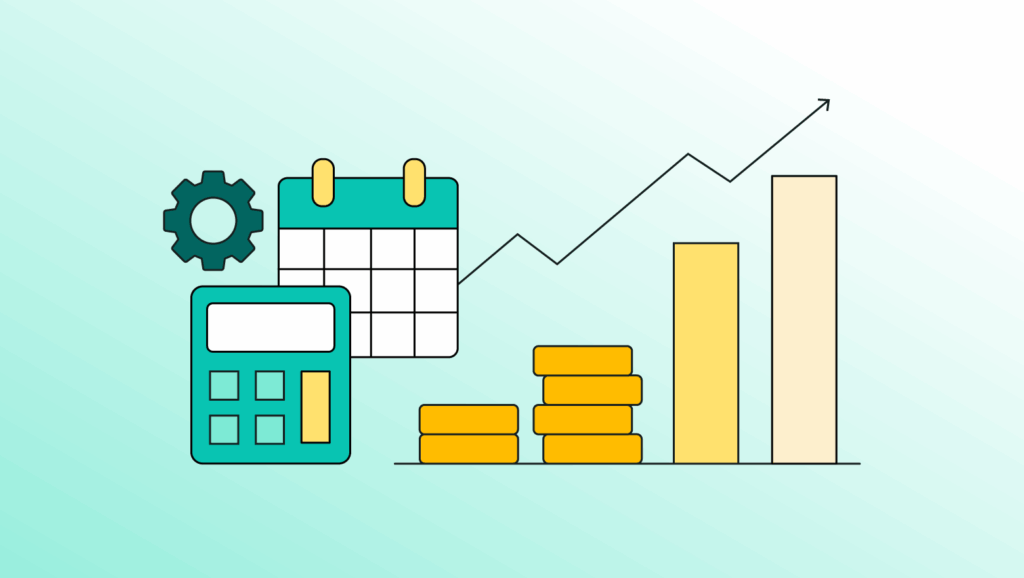
Your digital marketing budget should be connected to your goals.
A business that wants aggressive lead generation will need a different budget from a business focused mainly on organic visibility.
Your budget may include:
- Website development
- Landing pages
- SEO
- Content creation
- Photography and video
- Paid media spend
- Agency or freelancer fees
- CRM software
- Email marketing tools
- Analytics and reporting tools
- Design tools
- AI tools
When setting a budget, consider both the cost of marketing and the value of a customer.
For example, if one new customer is worth R20,000 to your business, you may be comfortable spending more to acquire qualified leads. If one sale is worth R300, your campaigns need to be much more cost-efficient.
The question is not only, “How much should we spend?”
The better question is:
“What are we willing to invest to acquire a profitable customer?”
15. Create a 30-Day Action Plan
A strategy becomes useful when it is turned into action.
Instead of trying to do everything at once, prioritise the most important steps.
A simple 30-day plan may look like this:
Week 1: Clarify the Foundation
- Define your business goals
- Identify your target audience
- Review your value proposition
- Audit your website and social media
- Check whether tracking is installed
Week 2: Improve Conversion Points
- Update website messaging
- Add stronger calls to action
- Improve enquiry forms
- Set up WhatsApp click tracking
- Create or improve landing pages
Week 3: Build Content and Campaign Assets
- Define content pillars
- Create a content calendar
- Write ad copy
- Prepare images or videos
- Create email or WhatsApp follow-up messages
Week 4: Launch, Measure and Optimise
- Launch campaigns
- Monitor performance
- Review lead quality
- Track cost per lead
- Adjust budget and creative
- Improve follow-up based on customer responses
This keeps the strategy practical and manageable.

16. Measure, Learn and Improve
Digital marketing is not something you set up once and forget.
Your first version of a campaign, landing page or content plan is rarely perfect. The advantage of digital marketing is that you can measure performance and improve over time.
Review your results regularly:
Weekly:
- Leads generated
- Cost per lead
- Website enquiries
- Campaign spend
- Best-performing ads
- Lead response time
Monthly:
- Sales from digital leads
- Conversion rate
- Revenue generated
- Best-performing channels
- Content performance
- Website performance
- Customer acquisition cost
Quarterly:
- Strategy performance
- Budget allocation
- Channel mix
- Customer retention
- CRM data quality
- Growth opportunities
The businesses that win with digital marketing are usually not the ones that do everything perfectly from the start. They are the ones that measure, learn and improve consistently.
Digital Marketing Strategy Checklist
Before launching your digital marketing plan, make sure you can answer these questions:
- What business goal are we trying to achieve?
- Who is our ideal customer?
- What problem do we solve for them?
- Why should they choose us?
- Which channels are most relevant?
- Is our website ready to convert traffic?
- What content will we create?
- What paid campaigns will we run?
- How will we capture leads?
- How will we follow up?
- What CRM or tracking system will we use?
- Which metrics will we measure?
- What is our budget?
- What will we improve first?
If you cannot answer these questions yet, your strategy needs more work.
A digital marketing strategy is not just a document. It is a practical plan for turning online attention into business growth.
The best strategies connect marketing, sales, data and customer experience. They do not focus only on getting more likes, followers or clicks. They focus on attracting the right people, giving them a reason to trust you, making it easy for them to take action, and following up properly.
Digital marketing works best when it is built as a system:
Audience → Message → Channel → Content → Traffic → Conversion → Follow-up → Measurement → Optimisation
When each part of that system works together, your marketing becomes more focused, more measurable and more likely to contribute to real sales growth.

Digital Marketing Workshop
Need help building a digital marketing strategy for your business?
Join our Digital Marketing for Sales Growth Workshop, a practical half-day session designed for entrepreneurs, business owners, sales managers and marketing managers.
You will learn how to develop a digital marketing strategy, choose the right channels, improve your website, create better content, understand paid ads, use CRM systems, apply AI and measure what is working.
You will also leave with a practical digital strategy framework and a 30-day action plan for your business.